Creatine HCL vs. Creatine Monohydrate
Walk into any supplement aisle or scroll through enough fitness content, and you'll most likely find a recurring debate: Creatine HCL or Creatine Monohydrate? One side claims superior absorption, smaller doses, and better mixability. The other has more than 30 years of research behind it. So what's actually going on?
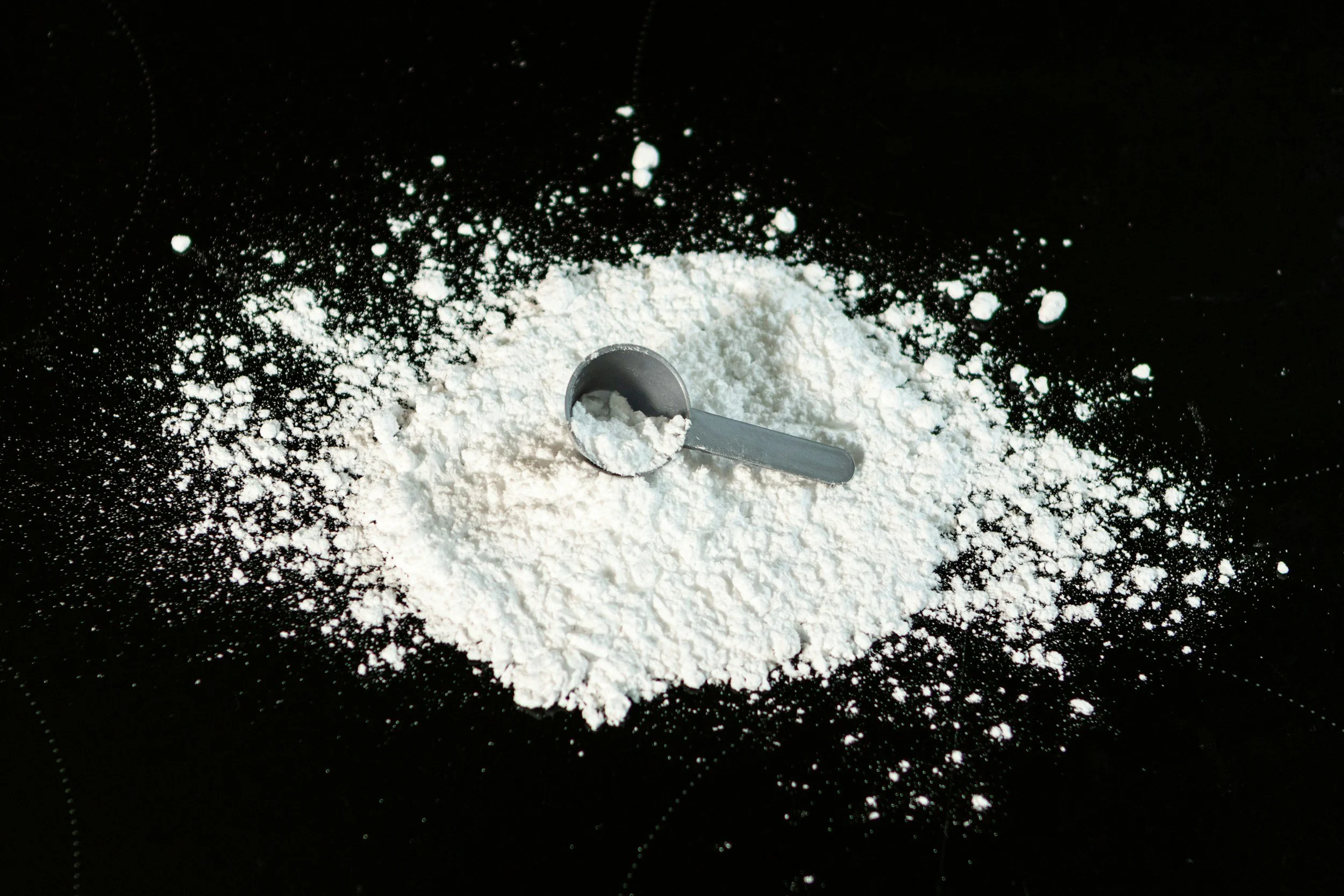
We recently had this question sent to us by our friends at The Taylor Hooton Foundation as well, so let's break it down without the marketing noise. Here we go.
Creatine Hydrochloride (HCL) is marketed on the basis of one key advantage: it dissolves in water up to 41 times more easily than Creatine Monohydrate. That sounds rather significant if you ask me. And in a test tube, it actually is. But here's where the science diverges from the sales pitch… your literal gut is not the same as a test tube.
Creatine Monohydrate is already absorbed with near-100% efficiency in the human gastrointestinal tract. Which means that extra solubility? It doesn't necessarily translate into extra results. Better mixability in a glass of water is not the same as better uptake in your muscles.
A 2024 peer-reviewed study published on PubMed (Eghbali et al.) put this to the test directly. 40 participants were split into 4 groups across 8 weeks of resistance training: Creatine HCL, Creatine Monohydrate with a loading phase, Creatine Monohydrate without a loading phase, and, of course, a placebo. Both creatine forms significantly improved strength, muscle growth, and hormonal responses. However, creatine HCL showed no real benefit over Monohydrate.
That pattern holds across the wider body of evidence. When doses are matched to achieve similar tissue saturation, performance outcomes converge. The superior absorption claim is chemically accurate in isolation. In context, it's misleading, though, because Monohydrate was already doing the job at full capacity to begin with.
There are genuine, practical reasons someone might prefer it. If you experience bloating or GI discomfort with Monohydrate, HCL tends to be gentler. If you dislike the volume of powder required daily, HCL's smaller dose format may suit you better. And for product formulation in beverages, its mixability might be a real advantage.
These are legitimate reasons. They're just not the ones being promoted and advertised.
Creatine Monohydrate remains the top-tier type of creatine; 680+ peer-reviewed studies, lower cost, and essentially complete bioavailability. Creatine HCL is a legitimate and effective alternative with real formulation benefits, but it has not been shown to outperform Monohydrate in head-to-head clinical trials.
Want daily creatine facts, research breakdowns, and no-nonsense tips? Follow us on Instagram; we're posting every day.