The Case for Clinical Creatine
How do we convince healthcare professionals of the therapeutic potential of creatine monohydrate?

Creatine phosphate is a naturally-occurring molecule with robust effects throughout the body. Increases in muscle creatine phosphate stores through supplementation of creatine monohydrate has decades of data to support improvements in athletic performance and muscle function, and supplementation with creatine monohydrate (and other formulations, to a lesser extent) has shown to reliably and safely enhance those stores. [Kreider, 2017] In the forty years of scientific rigor, we have seen benefits of creatine beyond exercise performance, with large-scale trials in Huntington’s and Parkinson’s disease, other neurological conditions like Alzheimer’s and depression, and continually growing evidence in aging populations. Creatine should no longer be perceived as just a supplement; creatine should be considered as a potential medical therapy.
While evidence does continue to mount regarding the efficacy and safety of creatine monohydrate in clinical populations, no major clinical guidelines currently recommend creatine monohydrate for any medical indication. Similar to what we would expect in the drug development sector, the reasons why adoption has not appreciably improved in the clinical setting, despite growing data to support uptake, can be narrowed down to a few key factors.
Misconceptions about creatine among healthcare professionals and patients: The general public still raises questions like “Does creatine cause kidney problems?” and “Is creatine a contributor to cancer?”.
Continued efforts to provide educational materials for patients and physicians alike relative to creatine ingestion and health outcomes
HCPs will want to know how creatine interacts (the mechanism-of-action), how it improves their patients, and if it is safe
Lack of regulatory approval for specific medical indications: The supplement industry is largely unregulated, with minimal oversight or quality control. As long as creatine is perceived as a supplement, HCP adoption will remain low.
Highlight third-party investigations and clinical trials associated with creatine, highlighting clinical populations and disease state-specific outcomes
HCPs will want to know how therapy with creatine monohydrate will fit within established treatment guidelines, including any potential interactions or contraindications
Need for larger, longer-duration trials to establish efficacy.
Creatine requires time to saturate the muscles, and further time for muscles to adapt, requiring longer duration studies to better delineate between creatine-treated and -untreated adaptations.
The largest trial is in Parkinson’s (n=1741), with most trials in the clinical setting having less than 100 participants.[Kieburtz, 2015]
HCPs want to see larger sample sizes, and they want to know the durability of the treatment (how long).
Absence of standardized outcome measures across studies.
Different disease states have different key outcomes. In muscular dystrophy settings, consistent strength and subjective improvements were noted, while treatment in Parkinson’s yielded minimal response.[Kley, 2013; Kieburtz, 2015]
Significant benefits have been found for major depressive disorder in women, but not in men, suggesting a need for balancing trials to better understand sex-specific differences in creatine treatment. [Smith-Ryan, 2021]
Limited understanding of optimal dosing for different populations.
The recommended dosing of creatine monohydrate is 0.05 - 0.015 grams per day (g/d), but disease-state–specific data are needed. [Kreider, 2022]
HCPs will want clear dosing information for prescribing in the general or specialist setting. More work is needed to clarify.
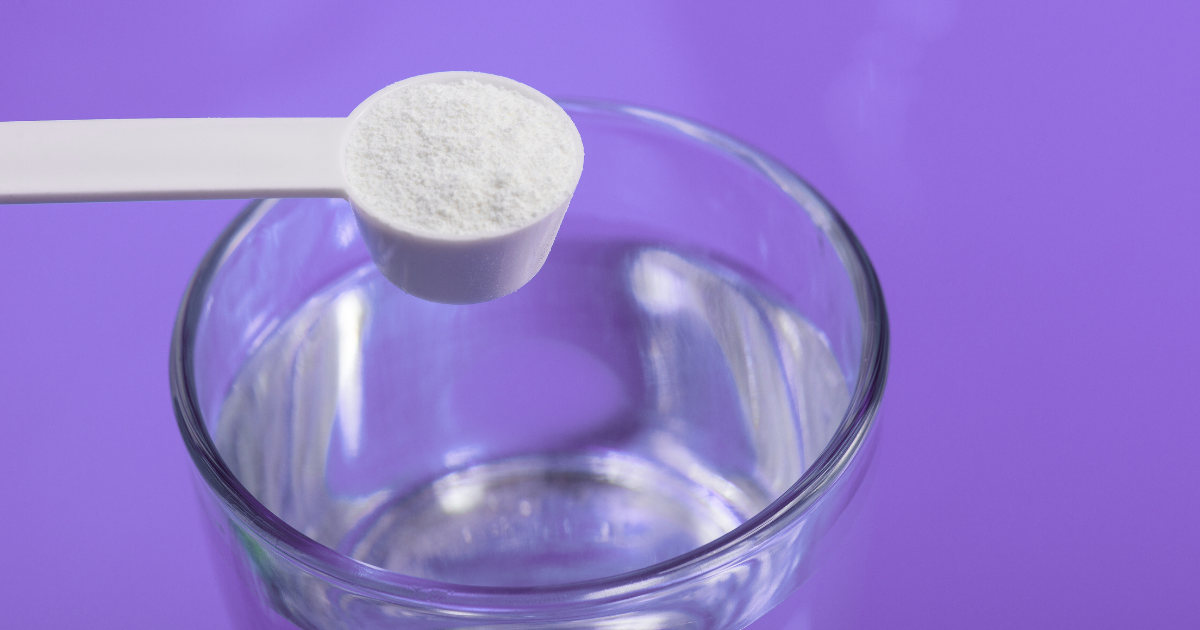
Creatine monohydrate is generally described as an affordable nutraceutical and a low-cost, scalable intervention, suggesting favorable cost-effectiveness considerations. However, there are minimal systematic cost-effectiveness analyses in the clinical setting. We must work at addressing the above hurdles, with the key tactic appearing to be on the educational side. In sharing resources with HCPs and patients, we show them that there are trial options outside of standard pharmacological approaches, which potentially lead to further data.
We all rise together,
Blaise Collins, PhD, ACSM-EP-C | Monthly Blog Contributor, Jenerise | Scientific Director | Neurology, Oncology, Hematology | Exercise Physiologist