
Of all the questions brands bring to us, one comes up more than any other right now: what is creatine doing in the brain, and are we anywhere near being able to say so on a label?
It's a fair question. Interest in creatine and brain health has grown fast, and the conversation online is often a step or two ahead of the research. Supplement brands, founders, formulators and product developers want to know where the science is heading before they commit to a concept, a formulation or a claim. So for the fifth edition of CreatinED, our educational webinar series on creatine science, we've invited one researcher to take that question on properly.
CreatinED Edition 5: Brain Creatine Dynamics: What Supplementation, Exercise, and Disease Are Teaching Us takes place online on Wednesday 2 December 2026, at 8:00am PT, 4:00pm UK and 17:00 CET. Our speaker is Dr Jedd Pratt of Manchester Metropolitan University.
How we came to know Jedd
We've been talking to Jedd about brain creatine for about a year. Steve, my co-founder, first spoke to him at the end of 2025 and enjoyed the conversation so much that he went straight back and re-read Jedd's paper on measuring brain creatine. That says a lot about both of them.
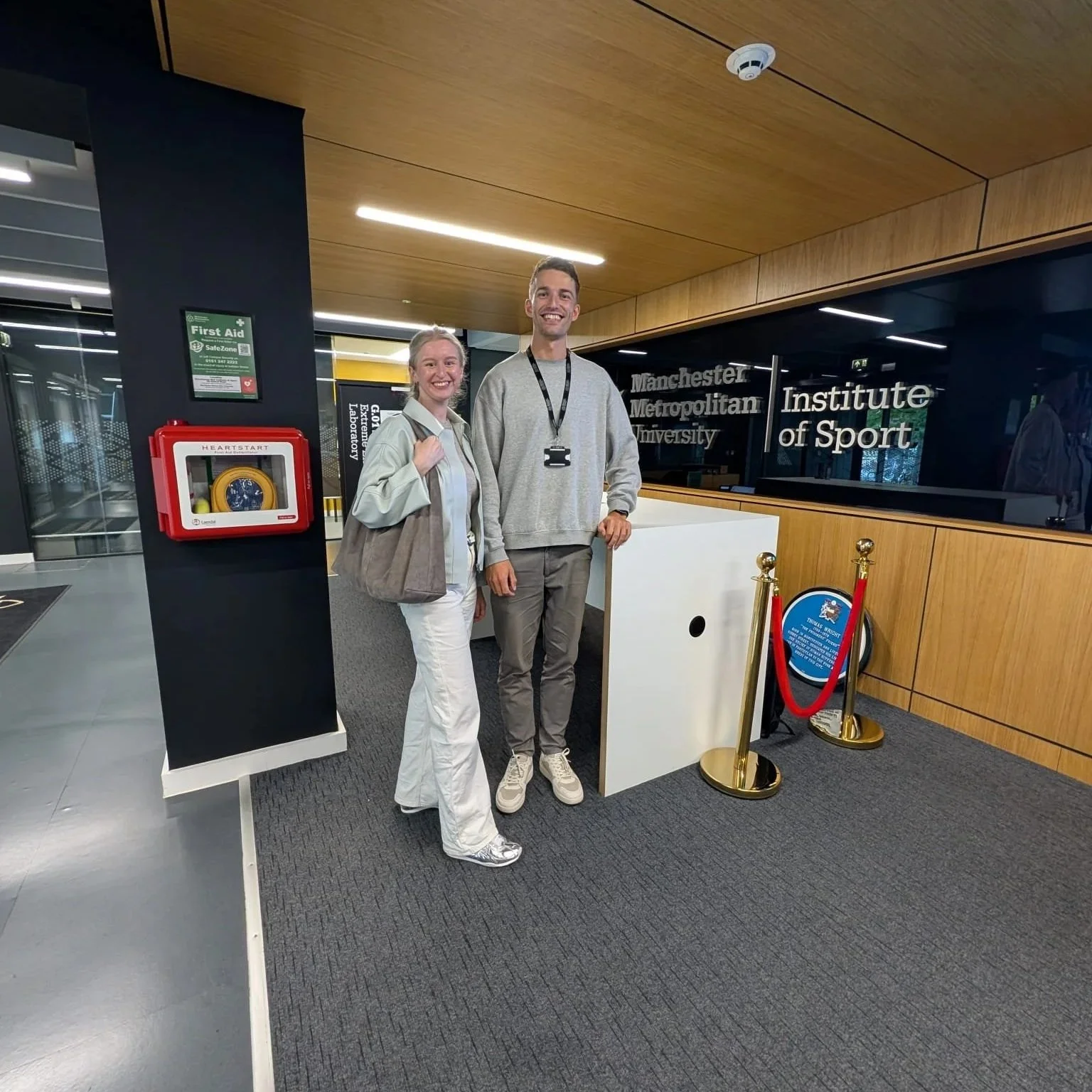
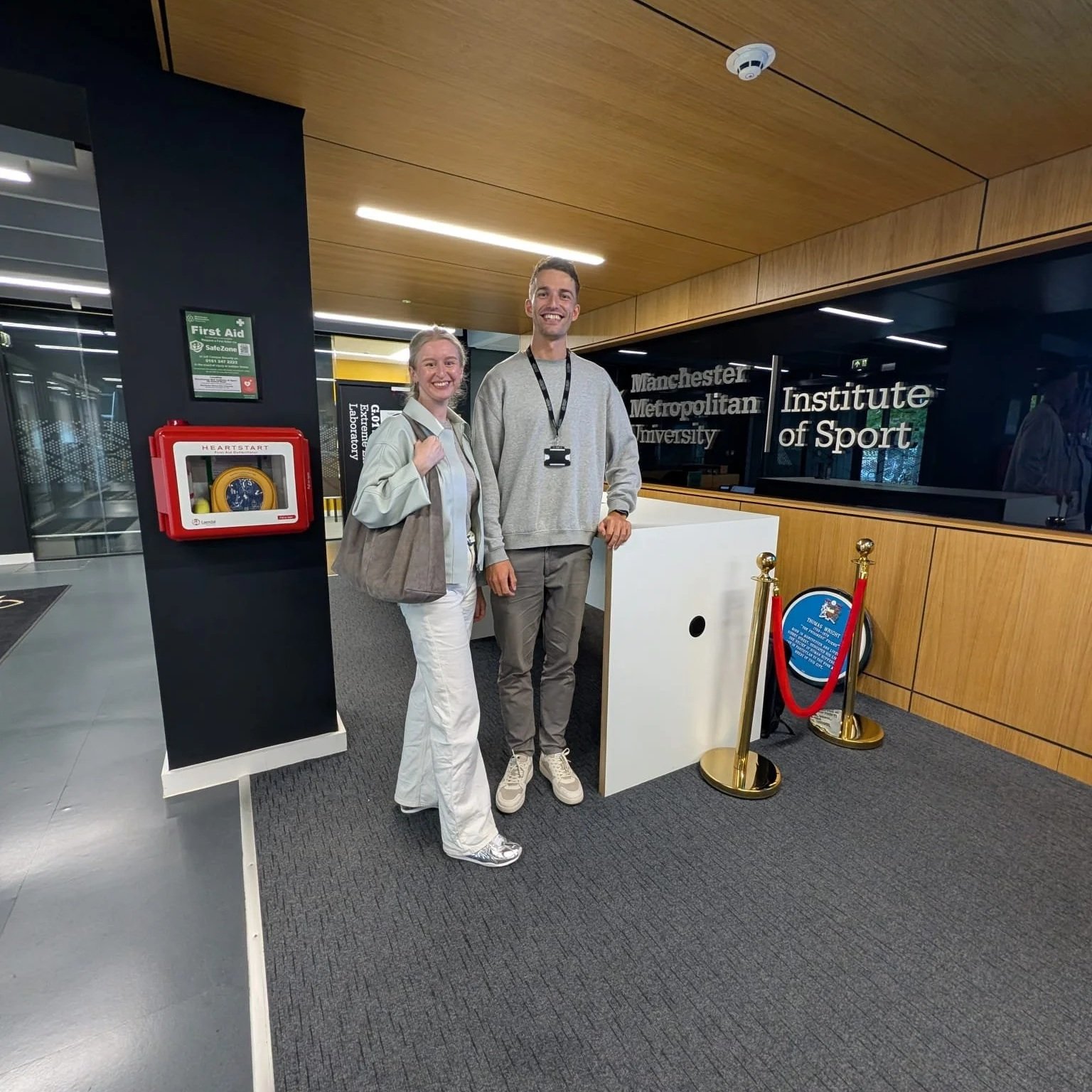
In September I visited Jedd at the Institute of Sport at Manchester Met, on Oxford Road, for an early-morning coffee before a train. It was a short visit, but it's the kind of conversation that stays with you: careful, curious and refreshingly honest about what we do and don't yet know.
Who Jedd is, and what he measures
Jedd is a Senior Research Associate in Musculoskeletal Physiology at the Manchester Metropolitan University Institute of Sport. He completed his PhD in Neuromuscular Physiology at University College Dublin, and since joining Manchester Met in 2023, he has built a programme of work on interventions to support musculoskeletal health and cognitive function across ageing, disease and sport.
What sets him apart for this topic is that he measures brain creatine himself, using magnetic resonance spectroscopy (MRS), a non-invasive MRI-based technique. His recent first-author papers include:
Reliability of brain creatine measurement (Experimental Physiology, 2025). Jedd and colleagues tested how consistently ¹H-MRS measures total creatine in three brain regions across repeated scans in 18 healthy adults.
Brain creatine and strenuous exercise (The FASEB Journal, 2026). The team scanned 16 healthy young adults before and after around 15 minutes of hard cycling.
A review of creatine supplementation and brain health (The Journal of Nutritional Physiology, 2026), covering the methodological challenges, the current evidence and the translational outlook.
He is also a co-author of a 2026 narrative review in the Journal of Dietary Supplements whose title sums up the mood nicely: "Creatine supplementation and the brain: have we put the cart before the horse?" And his newest Experimental Physiology paper (2026) is a systematic review on the muscle side, looking at creatine supplementation during immobilisation and rehabilitation.
Two findings worth knowing about
Measurement matters more than most people realise. In the 2025 paper, the authors note that the margins of error in repeated brain MRS often surpass the effects reported for supplementation. In other words, some past studies may not have been able to tell a real change from noise. Their own protocol measured total creatine reliably, within an error of less than 2%, and showed large differences in creatine concentration between brain regions. For anyone reading a headline about creatine supplementation and cognitive function, that's useful context: where and how brain creatine is measured shapes what a study can detect.
The brain appears to draw on creatine under strain. In the FASEB Journal study, total creatine in the frontal cortex fell by 5.9% about 15 minutes after strenuous exercise and was still lower at 30 minutes. The authors suggest creatine and lactate may serve as alternative energy sources when the brain is working hard. It's one small study in healthy young adults, so it isn't evidence of a benefit from supplementing with creatine. But it adds to the picture of creatine as part of the brain's energy system, which is exactly why the field is paying attention.
What the session will cover
Jedd will take 30-40 minutes, in four parts:
Why creatine matters for the brain, including its role in brain energetics and cognition, and why the evidence so far has been inconsistent.
How brain creatine is measured, from proton (¹H) and phosphorus (³¹P) MRS to functional MRS, and the reliability challenges behind every result.
Whether supplementation can raise brain creatine, covering transport across the blood-brain barrier, acute and longer-term dosing strategies, and why the current evidence base is still weak.
What it could mean for health and performance, and what would still need to be shown.
The honest answer on claims
Brands often ask us whether cognitive claims are coming. Right now, there is no authorised EU health claim for creatine and cognitive function. EFSA assessed an application in 2024 and concluded that a cause-and-effect relationship had not been established, and the European Commission formally refused the claim in May 2026 (Regulation (EU) 2026/1118). The EU's authorised creatine claims relate to physical performance and muscle strength.
We're not a legal or claims authority, and none of this is regulatory advice. But it's why we think the most useful thing we can offer formulators and brands is clarity on the research itself: what it supports today, what it doesn't yet, and what better studies would need to look like.
Who it's for
This session is designed for supplement brands, founders, formulators, product developers in CPG, CDMOs and health professionals, as well as anyone with a serious interest in creatine research. It's technical without being dumbed down.
Places are complimentary. If brain creatine is on your roadmap, this is a good 40 minutes to spend.
This post is educational and does not constitute medical advice.
We all rise together,
Rachael Jennings | Co-Founder + CBO, Jenerise
Worth knowing: Jenerise makes Jenerise Cr.01™, a third-party verified, precision-grade B2B creatine ingredient. This content is educational and entertaining but also drives awareness of our product.
More creatine insights






Regulatory expert Diana Morgan explains why an American flag on your label is a claim, which policy shifts are coming for supplements, and whether US-made creatine could return, plus what it means to seize the years.