
From Steve's Desk, End of September
Right then. We're heading into October, and it's going to be a huge, huge month for us at Jenerise.
I've got two really quite different moments coming up. Two cities, two panels, and two topics that look like they've got nothing to do with each other. One's about the creatine supply chain. The other's about the brain. I'll be straight with you, I like going on a panel, so I'm made up about both. But stick with me, because by the end you'll see it's the same story.
Milan
First stop is CPHI Milan, the big pharmaceutical and nutraceutical expo. I've been invited onto a panel about supply chain in the broadest sense of the word, and it's a proper mixed bag. There'll be two technology companies building tools to support supply chains, a B2C pharmaceutical company developing therapeutic solutions, and us.
So what do we bring? The reality. We move large amounts of product out of China and into six very different global markets. Each one comes with its own paperwork, its own customs and its own import rules. That's what building and optimising a global supply chain looks like day to day, and it's what I'll be talking about.
When Demand Outruns Supply
Creatine is in an extremely fast-growing category. That's brilliant news, but growth like that leans hard on the supply chain, especially the scale-up of production to meet what I call consumer pull. We've already seen demand outstrip supply with protein and whey. Now we're seeing supply get very close to the point where it'll struggle to keep up with creatine. Quite an exciting place to be, if I'm honest.
It also throws up challenges that plenty of people further downstream never see. They only find out something's wrong when a note lands on their desk saying, "Sorry, we can't supply you," or the price has jumped because demand has pushed up the cost of the raw material. And it won't stop at creatine. As we head towards 2030, other ingredients are going to feel the same pull.
Brands that get in touch with us often ask one of their very first questions: what does your supply look like for the next couple of years? Good quality creatine can be scarce, and buyers are making decisions right now based on consistency of supply. I think that question is only going to get louder. If a brand embeds us as the creatine inside their entire product range, across all their SKUs, can we actually deliver?
Supply is only half of it, though. How do you give the consumer a layer of trust? For us that means transparency, third-party verification and lot-by-lot testing. And I'd love to see some of what we're working on become closer to an industry standard.
London
In November it's the Nutra HealthSpan Summit in London, organised by some dear friends of ours at NutraIngredients. They're the team behind the Sports and Active Nutrition Summit in San Diego in February 2025, and that's where I got up on stage for the first time ever and told the story of how the creatine category came into being. Stephen Daniells interviewed me. It's a remarkable story with twists and turns everywhere, and I'm incredibly proud of it. I love sharing it, so I'm chuffed to be going back.
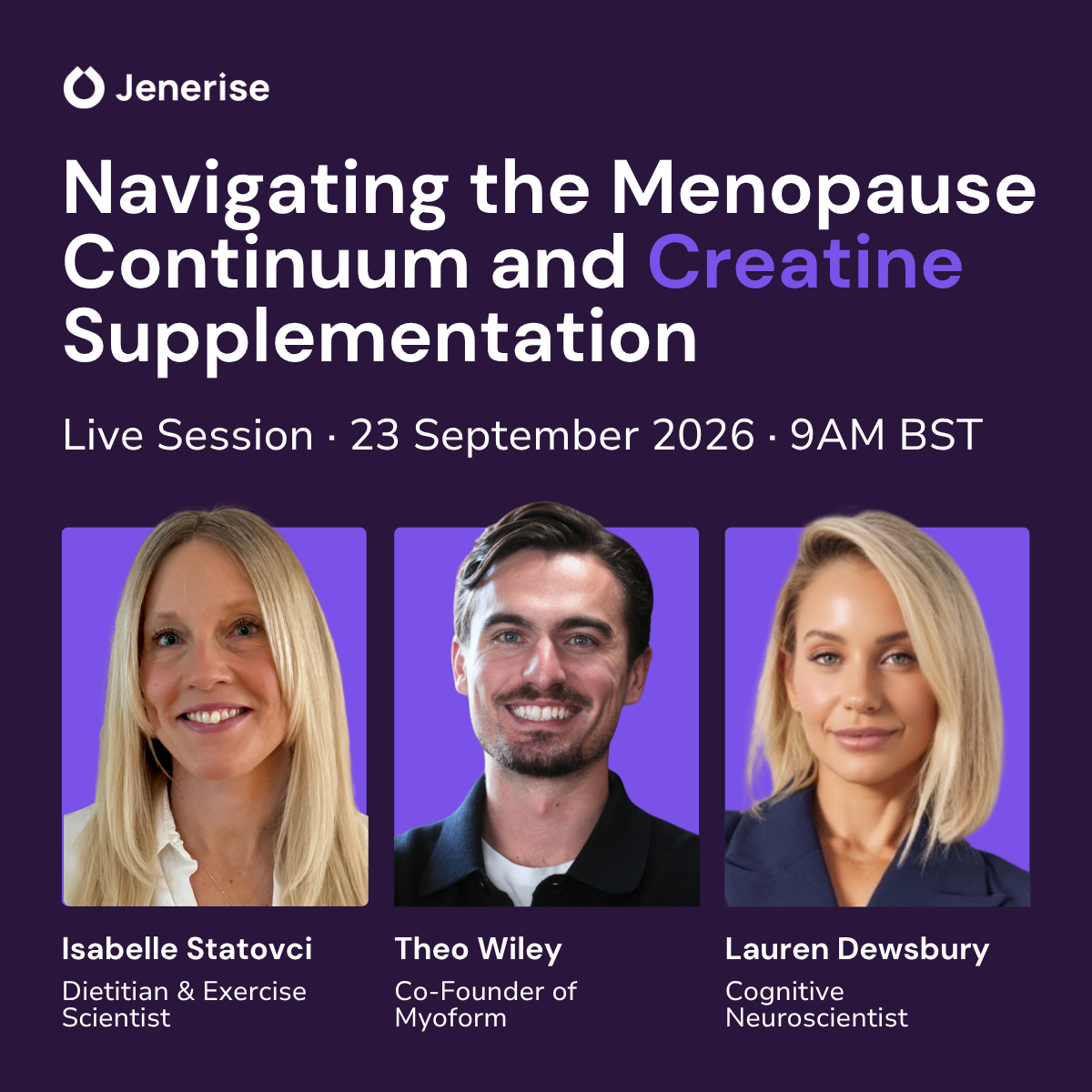
This time I'm on a panel about brain health, with three other very knowledgeable panellists. Creatine is in a fascinating place at the moment. Researchers at universities all over the world are looking closely at the role it could play in the brain.
The simplest end of that is sleep deprivation, fatigue and tiredness, which comes down to how the brain produces and uses cellular energy. Further along, there are some early indications, and I'll stress they're early, that could point to benefits in Alzheimer's, dementia and other neurodegenerative conditions. It's promising, but it's a long way from proven. What we need now is more studies that replicate the early ones, with larger groups of people, across different age groups and different settings, moving closer to clinical trials.
The Night Shift Story
One area we've had some really meaningful conversations about is shift work. There's a gentleman in Australia, Roger Sutherland, whose entire platform is built around shift workers. Think about what they're asking of their bodies. They're working when their body clock is telling them to sleep. That's police, ambulance crews, medical staff, factory workers.
Most of them, whatever the industry, have leaned on caffeine and energy drinks to get through the night. Then they go home and can't sleep, because caffeine hangs around in the body for hours. What we're starting to see are indications that swapping some of that caffeine for better nutrition, a better lifestyle and creatine could give them a bridge, the cellular energy they need at a time when their body clock says it's bedtime.
There are millions of shift workers worldwide. For Jenerise, niche use cases like this are ones we're very keen to explore, and potentially to build complete solutions around.
Why We're in Both Rooms
A supply chain panel and a brain health panel sound worlds apart. They're not. The science only matters if we can supply consistent, verified creatine at scale, and the supply chain only matters if there are uses worth supplying. We're working on both sides of that.
If you'd like to talk about creatine supply, verification or where the research is heading, we'd love to hear from you. Contact us and the team will be in touch.
We all rise together,
Steve Jennings | Co-Founder + CEO, Jenerise
Research into creatine and brain health is at an early stage. This article is for information only and is not medical advice.
Frequently asked questions
What is creatine?
Creatine is a natural substance found in the body and in some foods. Your muscles use it to make quick energy. People also take it as a supplement.
What is a supply chain?
A supply chain is the path a product takes from where it is made to where it is sold. For creatine, that path can cross oceans and many countries before it reaches a store shelf.
Could there be not enough creatine?
It is possible. More and more people want creatine, and factories need time to make more. The same thing already happened with whey protein, where people wanted more than could be made. That is why buyers now ask how much creatine a supplier can provide over the next two years.
What does "third-party tested" mean?
It means an outside company, not the seller, checks the product. They make sure it is what the label says and that it is clean and safe.
What does "lot-by-lot testing" mean?
A lot is one batch of a product. Lot-by-lot testing means every batch gets checked, not just some of them. That helps people trust what they buy.
Can creatine help the brain?
Scientists are studying this now. Early results suggest creatine may help the brain make energy, which could matter when a person is tired or has not slept. The research is still new, and scientists need bigger studies with more people to be sure.
Why do shift workers matter here?
Shift workers stay up at night and sleep in the day. Many drink coffee or energy drinks to stay awake, which can make it hard to sleep later. Early ideas suggest good food, healthy habits and creatine might be a better way to keep energy up. More research is needed.
What does Jenerise do?
Jenerise works with creatine, helping get it to brands around the world and working to make sure it is tested and trusted.
More from Jenerise








Our CEO Steve Jennings joined a CPHI Milan 2026 panel on scaling nutraceuticals without breaking supply. Read our take on sourcing resilience, fragmented regulation and what “proof” means for the next generation of functional health products.