
Creatine and Your Cycle: Should You Time Your Dose?

By Isabelle Statovci | Monthly Blog Contributor, Jenerise | Accredited Practising Dietitian & Clinical and Exercise Scientist
Many women notice their training feels different across the cycle. This could be heavier legs one week and nothing the next. This perception has a solid physiological basis, as progesterone's role in causing fluid retention during the luteal phase is well documented. Whether overall exercise capacity itself reliably shifts across the cycle is more contested than the wellness narrative suggests. The two most rigorous syntheses to date, a systematic review and meta-analysis spanning exercise performance broadly, and a later umbrella review focused specifically on strength and resistance training, both concluded that any population-level effect is minor or absent, with wide between-study variation and a high proportion of poor-quality primary research behind the estimate. Neither found grounds for general, cycle-based performance guidance (McNulty et al., 2020; Colenso-Semple et al., 2023).
Given this baseline, the focus of this article is narrower than whether the menstrual cycle alters overall performance: should creatine dosing be timed to specific cycle phases? Current evidence does not yet support phase-specific dosing for most women. However, the underlying physiology provides a strong biological rationale for these trials, even if the current evidence is not yet robust enough to justify altering your dose.
Why Hormones and Creatine Intersect:
Sex hormones appear to influence several steps in how the body handles creatine, including endogenous synthesis, transport into tissue, creatine kinase activity, and bioavailability (Smith-Ryan et al., 2025; Smith-Ryan et al., 2021; Ellery et al., 2016). Human uterine tissue data show that creatine-related enzymes and the creatine transporter rise during the early secretory phase of the cycle, staged by endometrial tissue biopsy rather than self-reported cycle day, a more rigorous phase-verification method than most trials in this literature use, and roughly corresponding to the early luteal phase in ovarian-cycle terms. This suggests cycle-linked shifts in creatine handling that extend beyond skeletal muscle (Philip et al., 2023).
Higher-estrogen phases are also associated with greater protein catabolism and reduced muscle glycogen storage (Smith-Ryan et al., 2021). Because the phosphocreatine energy system operates independently of glycogen availability, a larger phosphocreatine pool from creatine supplementation could theoretically help preserve high-intensity capacity precisely when glycogen reserves are already reduced. Separately, creatine's cell-volumizing effect, drawing water into muscle cells, has been proposed, in the broader muscle and liver physiology literature, to shift the intracellular environment toward an anabolic, protein-sparing state; cell shrinkage, by contrast, favors protein breakdown (Häussinger et al., 1993). That mechanism has not been tested in the menstrual-cycle context specifically. Together, these offer a plausible, mechanistically-grounded hypothesis for why creatine might matter more in the luteal phase. It is important to note that this remains a hypothesis and not a demonstrated clinical benefit.
What the Intervention Trials Show:
Direct intervention evidence is limited but points in a consistent direction: short-term creatine loading seems more useful in the luteal or high-hormone phase than in the follicular phase for fatigue and fluid-related outcomes (Moore et al., 2023; Gordon et al., 2023; Gutiérrez-Hellín et al., 2024). Still, nearly all phase-specific data come from a small cluster of recent trials, with limited replication and short loading windows (Myślicka et al., 2026).
In a randomized crossover trial, 20 g/day of creatine monohydrate for 5 days increased total, extracellular, and intracellular body water in the luteal phase without increasing body mass. However, the creatine group was small and unevenly divided, consisting of 12 naturally menstruating women and three using hormonal contraceptives. Because this group was compared against a placebo arm with a different demographic makeup, the data supporting this conclusion relies on a limited and imbalanced sample (Moore et al., 2023).
In a related trial from the same lab, 20 g/day loading produced the largest improvement in fatigue index during the high-hormone (luteal) phase, with a phase-by-supplement interaction at p = 0.048. That was the only significant result among five outcomes tested in the same study, heart-rate variability, average power, peak power, and time to peak power all showed no effect. While a single, marginally significant result out of five tested outcomes is notable, this isolated finding is insufficient to establish a reliable phase effect (Gordon et al., 2023)
A 2025 follow-up from the same group found better bioimpedance phase angle in the luteal phase and preserved jump performance compared with placebo, suggesting a possible benefit for cellular integrity later in the cycle (Moore et al., 2025).
A 2026 narrative review synthesizes this same cluster of trials, suggesting greater creatine benefits in the luteal phase (Myślicka et al., 2026). However, it is important to note that a narrative review provides no new, independent data to confirm these findings. The review also highlights pervasive methodological limitations across the current literature: small sample sizes, reliance on self-reported cycle tracking rather than hormone testing, a lack of long-term trials, and the grouping of hormonal contraceptive users with naturally menstruating women without separate analysis. Crucially, these limitations apply to all the underlying trials discussed above, restricting the strength of the entire evidence base.
Dietary Creatine and Cycle Regularity:
Separately from supplementation trials, population data suggest many women consume suboptimal dietary creatine, averaging around 10.5 mg/kg/day against the 13 mg/kg/day threshold used in NHANES analyses. Higher dietary creatine intake was associated with fewer irregular periods, with an odds ratio of 0.75 for oligomenorrhea among women consuming at least 13 mg/kg/day (Ostojic et al., 2024).
This is observational data from a cross-sectional survey, not a controlled trial, so it cannot establish that increasing creatine intake would regulate cycles, only that the two are correlated in this dataset.
Dosing:
Across the broader creatine literature, the better-supported approach remains consistent daily use rather than phase-timed dosing, with optional loading only if faster saturation is desired (Smith-Ryan et al., 2021; Gutiérrez-Hellín et al., 2024; Antonio et al., 2024). Standard daily intake of roughly 3–5 g is well established and does not require a loading phase to be effective over time.
Precise timing around a workout also appears to be a minor factor: a 5 g dose can take up to about two hours to peak in the blood, so exact ingestion timing relative to training is unlikely to matter much in practice (Antonio et al., 2024). This same logic applies to the menstrual cycle: it is the total daily intake, sustained consistently over weeks, that drives results.
Key Takeaways
There is no evidence-based case yet for changing your creatine dose across the menstrual cycle.
Consistent daily intake of 3–5 g is the well-supported approach; loading facilitates faster muscle saturation and is optional.
If you notice worse fatigue or recovery specifically in the luteal phase, that is the subgroup the current (limited) data most plausibly speaks to, but treat it as a hypothesis to test for yourself and not a confirmed recommendation.
Because much of the phase-specific research originates from a small, interconnected group of researchers, this topic requires independent replication before the findings can be considered conclusive.
The scope of this article is limited to creatine and menstrual-cycle timing specifically. Personal dosing decisions, particularly alongside menstrual symptoms, pregnancy, perimenopause, or hormonal contraception, should be discussed with an appropriate healthcare professional.
We all rise together,
Medical Disclaimer: This article draws on peer-reviewed and systematic-review literature in sports nutrition and pediatric sports medicine. The information provided in this article is for educational and informational purposes only and does not constitute medical advice. It is not intended to be a substitute for professional medical advice, diagnosis, or treatment. Always seek the advice of your physician or other qualified healthcare provider with any questions you may have regarding a medical condition.
More articles by Isabelle





Frequently asked questions
Should I change my creatine dose during my cycle?
Not yet. Scientists do not have enough proof to say that you should. Right now, the best-supported plan is to supplement with a small amount every day.
How much creatine should I supplement with each day?
About 3 to 5 grams a day is the amount that has been tested the most. Some people supplement with a big dose for a few days first. This is called loading. It fills your muscles faster, but you do not need it.
What is the luteal phase?
It is the second half of your cycle. It starts after ovulation and ends when your next period begins. Hormones change a lot during this time, and your body may hold on to more water.
Why are scientists looking at creatine and the luteal phase?
Hormones seem to change how your body uses creatine. A few small studies found that creatine may help with tiredness during the luteal phase. But most of these studies came from one group of researchers, and they were small. We need more studies before we can be sure.
Does the time of day I supplement creatine matter?
Not much. Creatine can take about two hours to build up in your blood, so taking it right before or after a workout is not a big deal. What matters most is taking it steadily, day after day.
Further Reading and References
Antonio J, et al. Part II. Common questions and misconceptions about creatine supplementation: what does the scientific evidence really show? Journal of the International Society of Sports Nutrition, 2024.
Colenso-Semple LM, et al. Current evidence shows no influence of women's menstrual cycle phase on acute strength performance or adaptations to resistance exercise training. Frontiers in Sports and Active Living, 2023.
Ellery S, et al. Creatine for women: a review of the relationship between creatine and the reproductive cycle and female-specific benefits of creatine therapy. Amino Acids, 2016.
Gordon A, et al. The Effects of Creatine Monohydrate Loading on Exercise Recovery in Active Women throughout the Menstrual Cycle. Nutrients, 2023.
Gutiérrez-Hellín J, et al. Creatine Supplementation Beyond Athletics: Benefits of Different Types of Creatine for Women, Vegans, and Clinical Populations — A Narrative Review. Nutrients, 2024.
McNulty KL, et al. The Effects of Menstrual Cycle Phase on Exercise Performance in Eumenorrheic Women: A Systematic Review and Meta-Analysis. Sports Medicine, 2020.
Moore SR, et al. A Randomized Controlled Trial of Changes in Fluid Distribution across Menstrual Phases with Creatine Supplementation. Nutrients, 2023.
Moore SR, et al. The effects of creatine loading on cellular integrity and jump performance across the menstrual cycle. Journal of the International Society of Sports Nutrition, 2025.
Myślicka W, et al. Differences in Response to Creatine Supplementation in Women Depending on the Menstrual Cycle Phase: A Narrative Review. Quality in Sport, 2026.
Ostojic SM, et al. Association between dietary intake of creatine and female reproductive health: Evidence from NHANES 2017–2020. Food Science & Nutrition, 2024.
Philip M, et al. Aspects of human uterine creatine metabolism during the menstrual cycle and at term pregnancy. Biology of Reproduction, 2023.
Smith-Ryan A, et al. Creatine in women's health: bridging the gap from menstruation through pregnancy to menopause. Journal of the International Society of Sports Nutrition, 2025.
Smith-Ryan A, et al. Creatine Supplementation in Women's Health: A Lifespan Perspective. Nutrients, 2021.

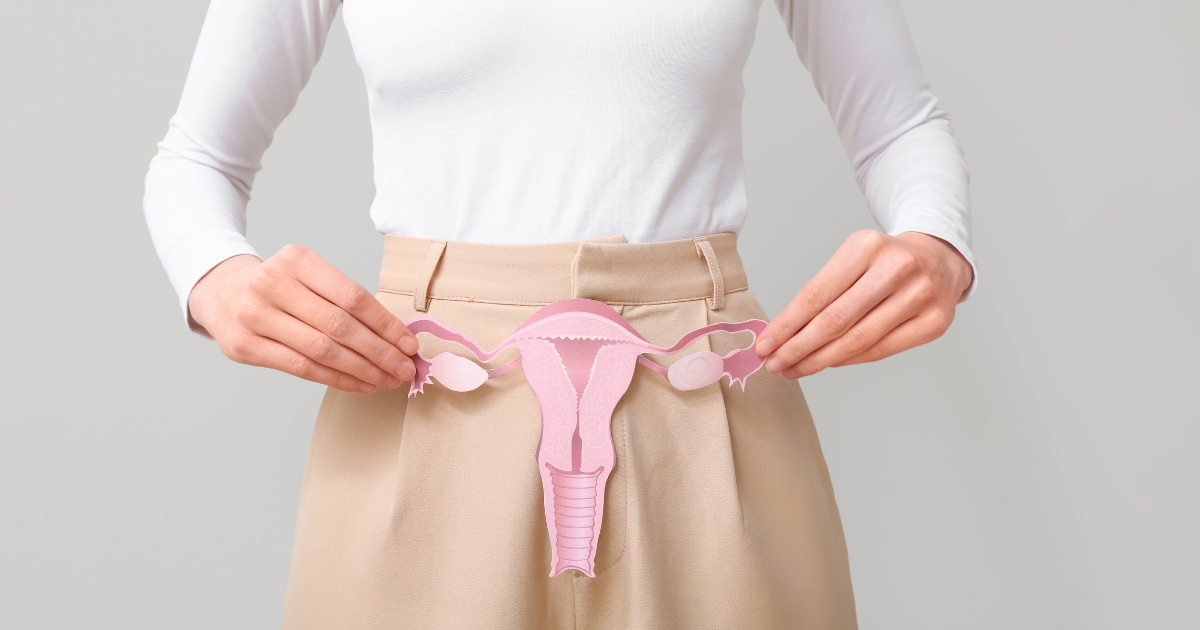
Heavy legs one week, strong the next? Wellness feeds say to time your creatine to your cycle. Isabelle Statovci dug into the research to see what holds up, what is still just a hypothesis, and what to do with your daily scoop. Spoiler: keep it simple.