
At a glance
No creatine is more than 100% creatine. A result over 100% comes from how the number is calculated.
Creatine monohydrate is creatine plus a little water. Labs measure the water on its own, then do some maths.
If a batch holds a little less water than the textbook, the maths can go over 100%. Done that way, Jenerise Cr.01™ batches would read about 100.7–100.9%.
The big headline number can’t show the tiny things that matter. Impurities in ppm and heavy metals tell you much more.
Why people are asking us
Brands and distributors, especially in Asia, have been asking us a fair question.
Some creatine certificates of analysis (CoAs) in their markets show a content assay (commonly referred to as purity) of 100.1%, 101% or even 102%. Cr.01’s CoAs show an average of 99.96%, with some of our batches up to 99.97%.
So is the creatine with the bigger number better?
No. It’s the same kind of powder with different maths. Here’s how it works.
What creatine monohydrate really is
Creatine monohydrate is two things joined together: creatine and water.
“Mono” means one. “Hydrate” means water. Each creatine molecule holds on to one water molecule. That water is part of the powder. It’s not a leak or a mistake.
In the textbook, 100 g of creatine monohydrate is made of:
87.9 g of creatine
12.1 g of water
These numbers come from how much each molecule weighs. Scientists measure this in grams per mole (g/mol), a standard way to compare molecules. Creatine weighs 131.13 g/mol. Creatine monohydrate weighs 149.15 g/mol. And 131.13 ÷ 149.15 = 87.9%.
Real powder is never exactly like the textbook. Some batches hold a bit less water. Some hold a bit more. That small difference is where the over-100 numbers begin.
The maths, step by step
Let’s take a real Cr.01 batch: CMP 20260731.
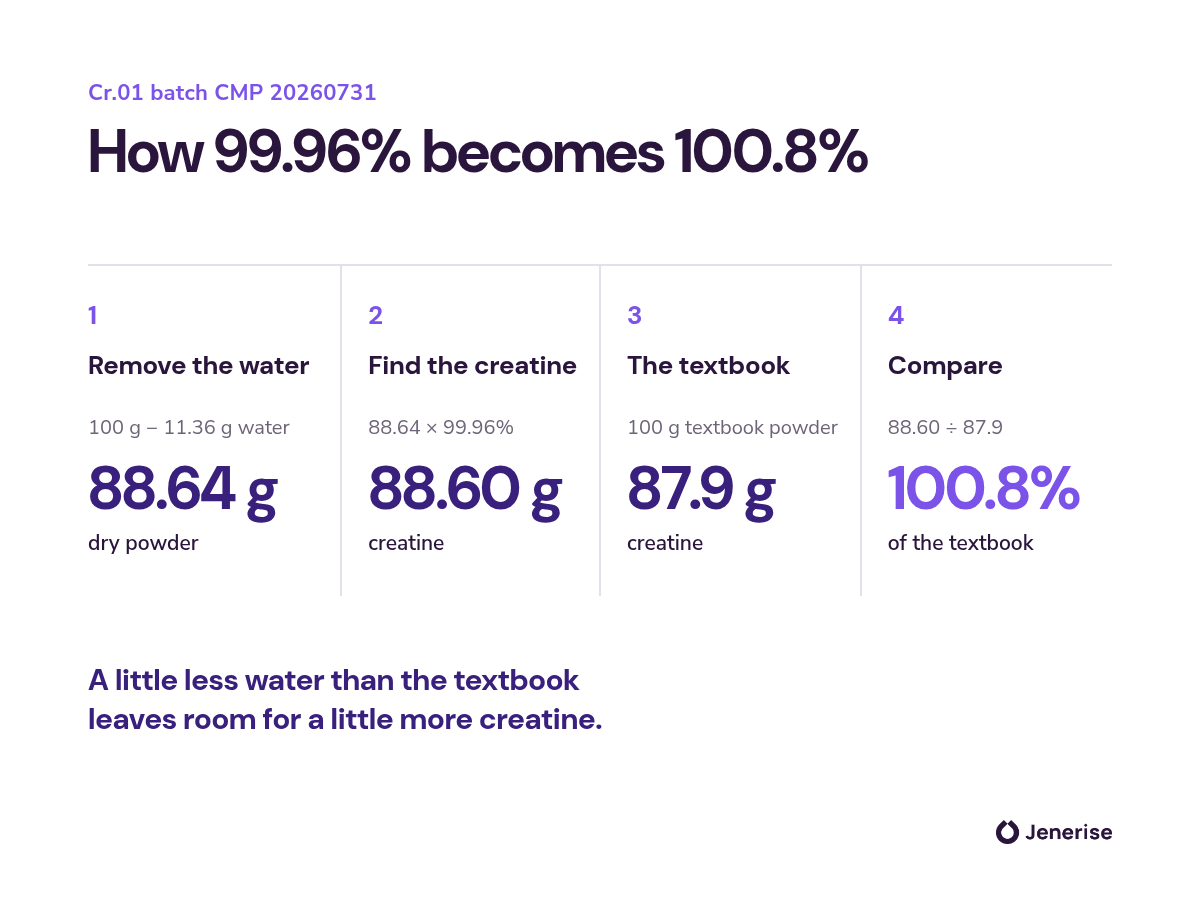
Step 1: Take out the water. Start with 100 g of powder. The lab measures 11.36 g of water. 100 − 11.36 = 88.64 g of dry powder.
Step 2: Find the creatine in the dry powder. The lab test shows that 99.96% of the dry powder is creatine. 88.64 × 0.9996 = 88.60 g of creatine.
Step 3: Look at the textbook. Textbook creatine monohydrate holds 87.9 g of creatine in every 100 g.
Step 4: Compare the two. 88.60 ÷ 87.9 = 1.008. That’s 100.8%.
So what happened? Our batch held a little less water than the textbook: 11.36 g instead of 12.1 g. Less water leaves room for a little more creatine in every 100 g. So next to the textbook, it goes over 100%.
Same powder, two numbers
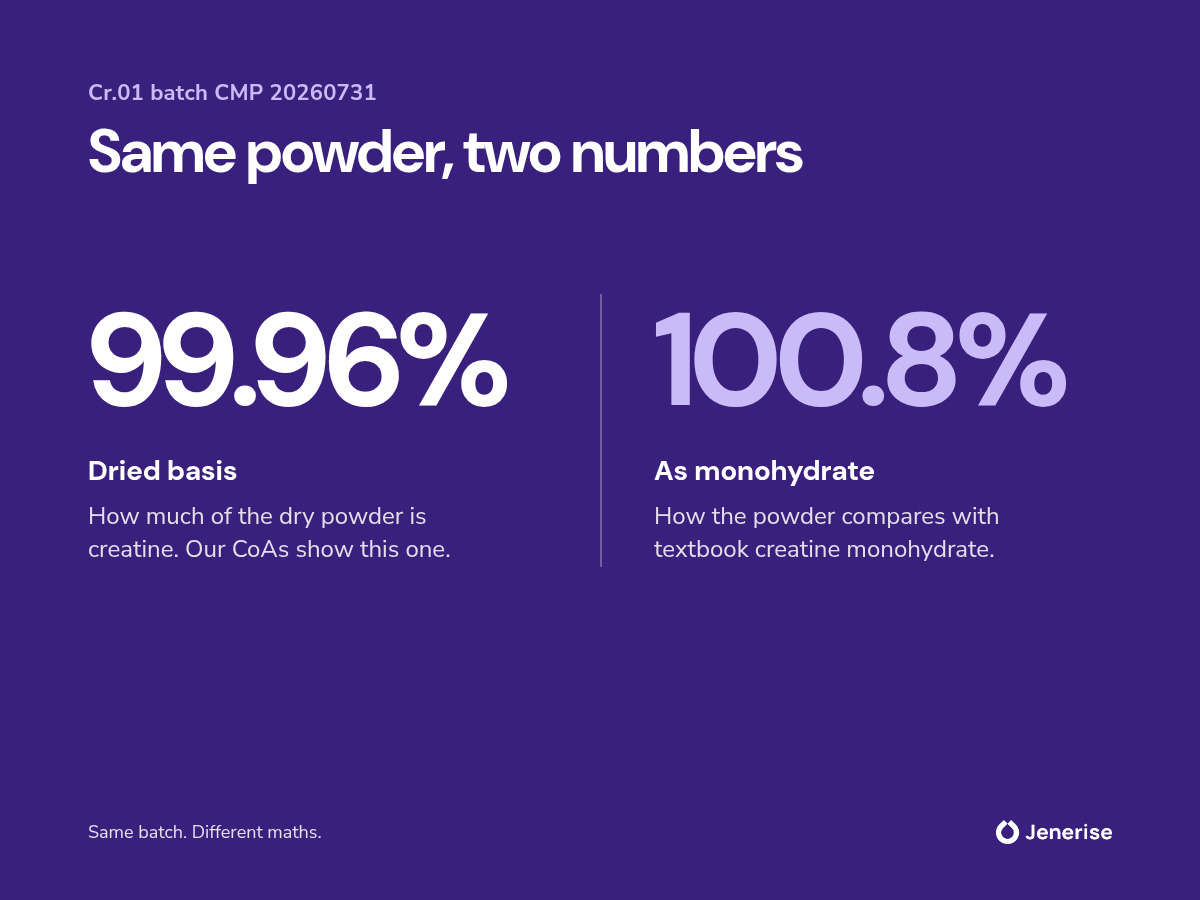
Both numbers describe the very same batch. They just answer different questions.
99.96% answers: “How much of the dry powder is creatine?” This is how Cr.01’s CoAs report it. Labs call it the “dried basis”.
100.8% answers: “How does this powder compare with perfect textbook creatine monohydrate?” Labs often call this “as monohydrate”.
Neither one is a trick. The trouble starts when two CoAs that use different maths are put side by side, as if they used the same maths.
What it looks like for every Cr.01 batch
Here are some Cr.01 batches worked out in both ways.
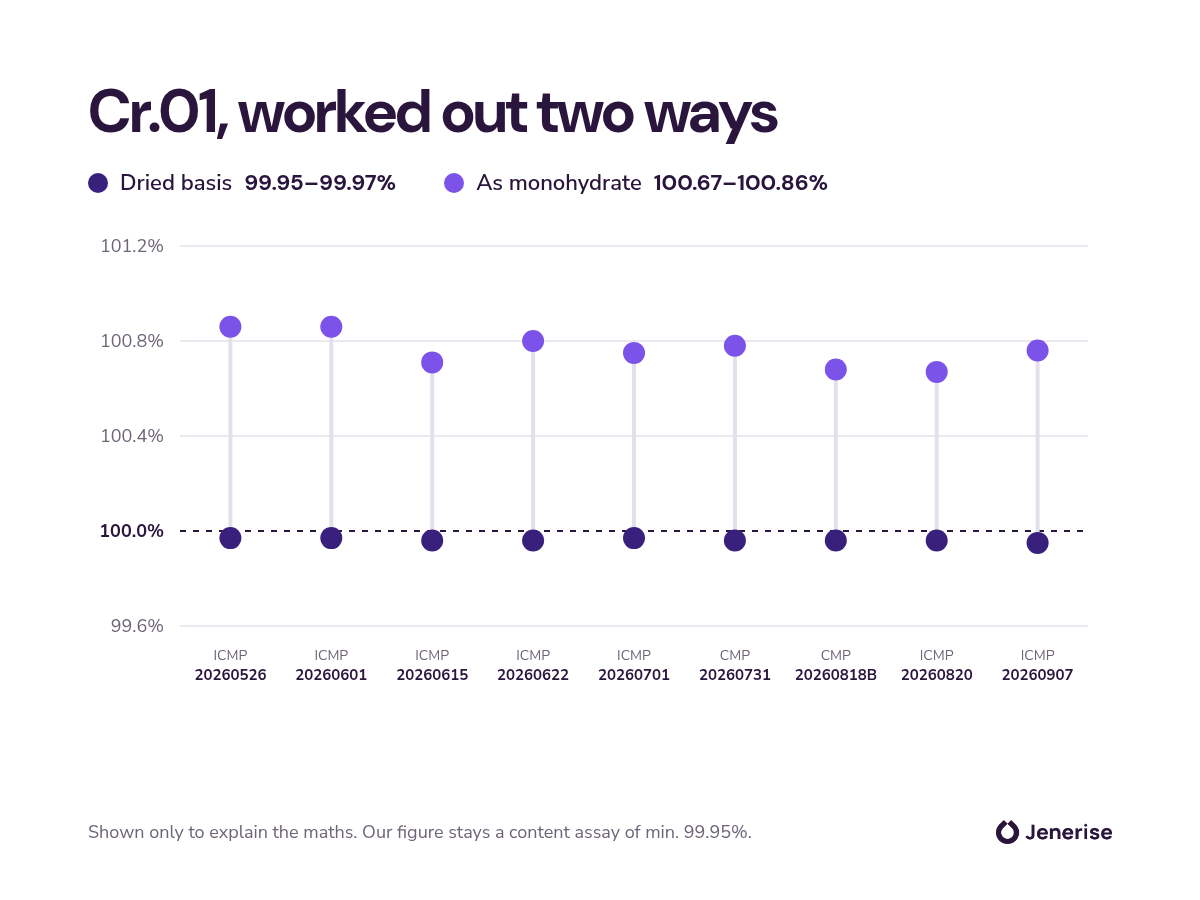
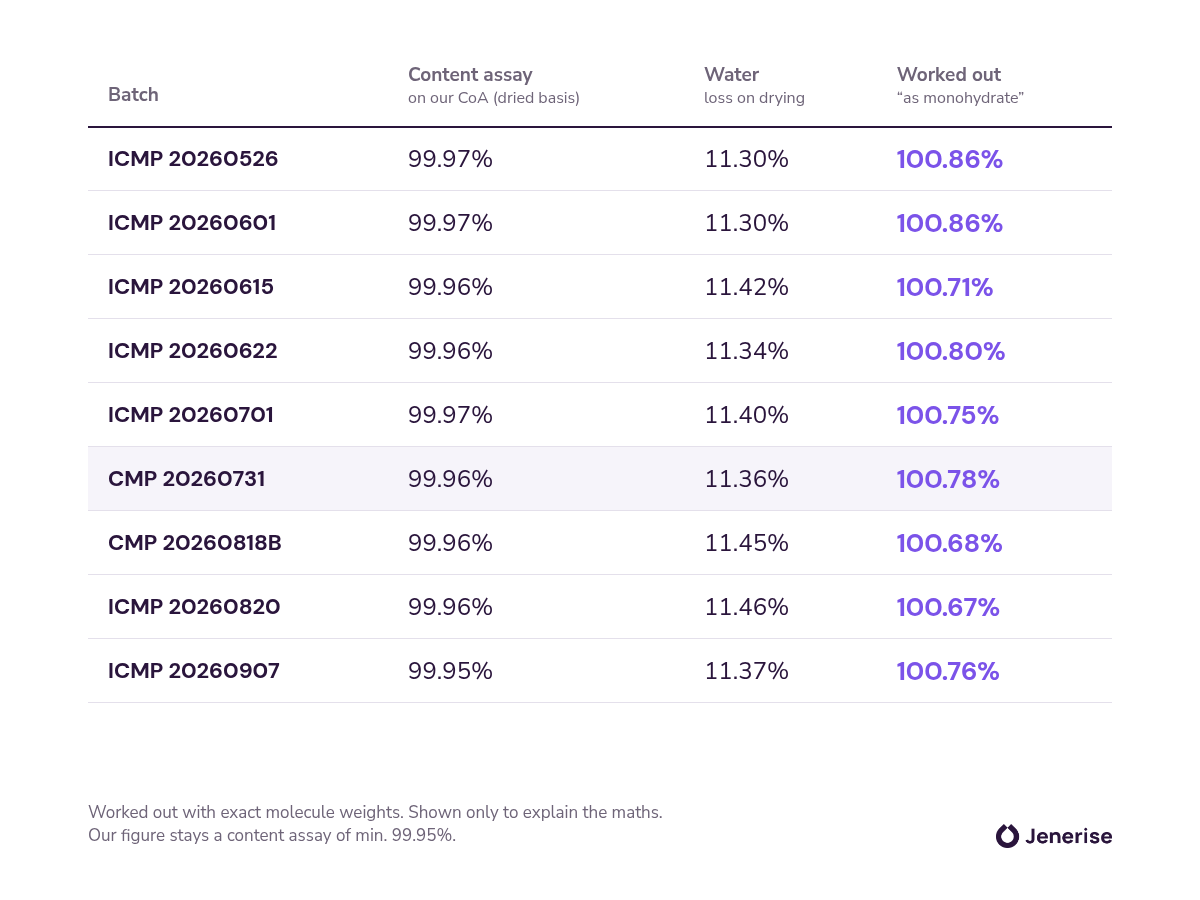
Worked out the second way, every batch lands between 100.67% and 100.86%. (The table uses the exact molecule weights, so CMP 20260731 shows 100.78%. The simple maths above rounds it to 100.8%.)
To be clear, this is only here to show the maths. We don’t claim Cr.01 is over 100%. Our figure stays the same: a content assay of minimum 99.95%, with a batch average of 99.96% and some batches at 99.97%.
Two more reasons a number can go over 100
1. The lab method allows it. One standard supplier spec for creatine monohydrate, tested by titration (a classic lab test), accepts results from 98.5% to 101.5%. The method itself expects some results above 100.
2. Every test has a small margin of error. No test is perfect. A result can be off by about 0.5–1%, up or down. So a batch that’s very close to 100 can land just above it.
Even some of the best-known creatines in the world report figures above 100% in public regulatory files. It’s normal. It isn’t a sign of extra creatine.
Why the headline number isn’t the point
Now for the part that matters most.
A margin of error of 0.5–1% sounds small. But let’s count it in ppm, which means “parts per million”.
0.5% = 5,000 ppm
1% = 10,000 ppm
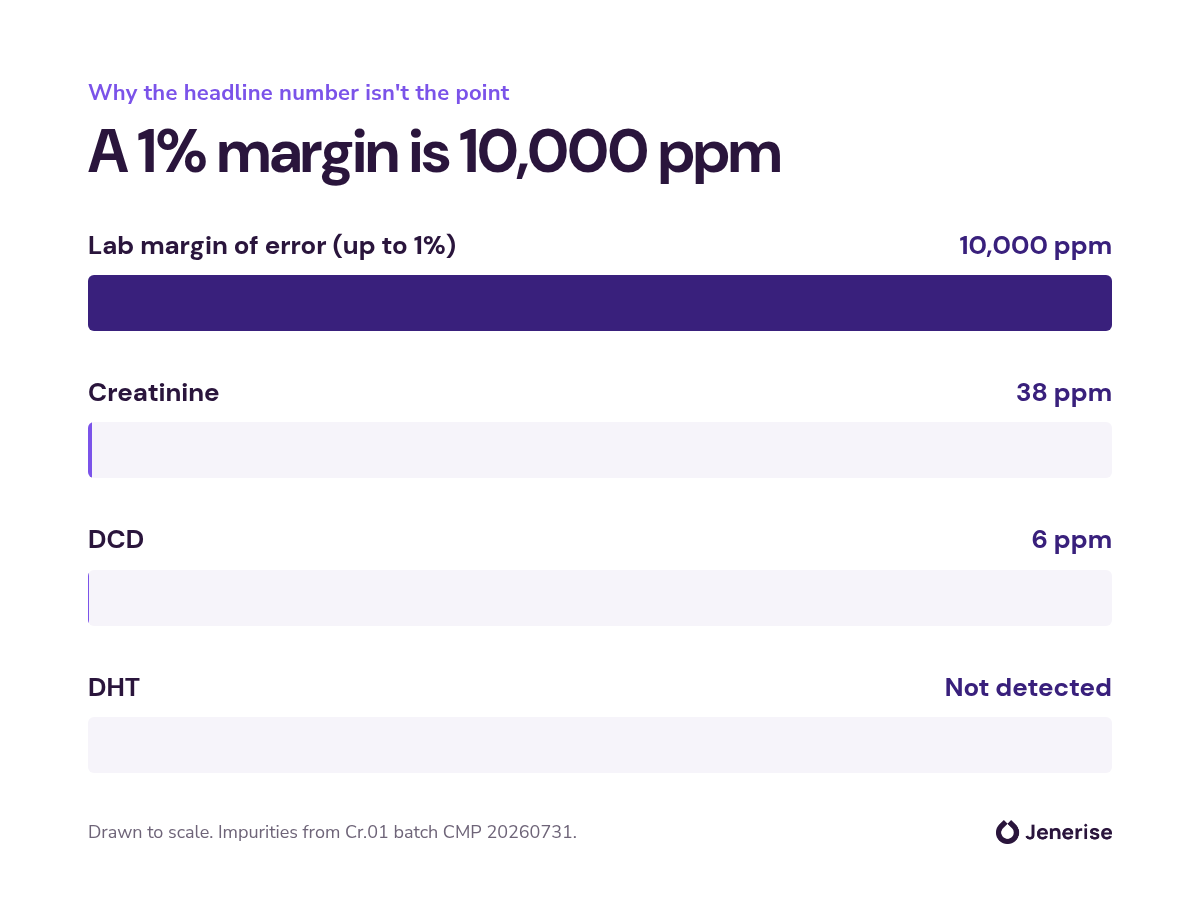
The things you want to keep out of creatine are found in tiny amounts. Often that’s single-digit or double-digit ppm. Here’s Cr.01 batch CMP 20260731:
Creatinine: 38 ppm
DCD (dicyandiamide): 6 ppm
DHT (dihydrotriazine): not detected
Creatinine is a natural breakdown product of creatine. Heat and moisture speed it up.
Put those side by side. The headline test can wobble by up to 10,000 ppm. The impurities sit at 6 to 38 ppm. The headline number simply can’t “see” them. Two powders could show the same headline number and still be very different where it counts.
Heavy metals matter most of all: lead, arsenic, cadmium and mercury. They are also measured in tiny amounts, so they need their own results.
What to ask for instead
Instead of looking for the biggest headline number, ask for these four things:
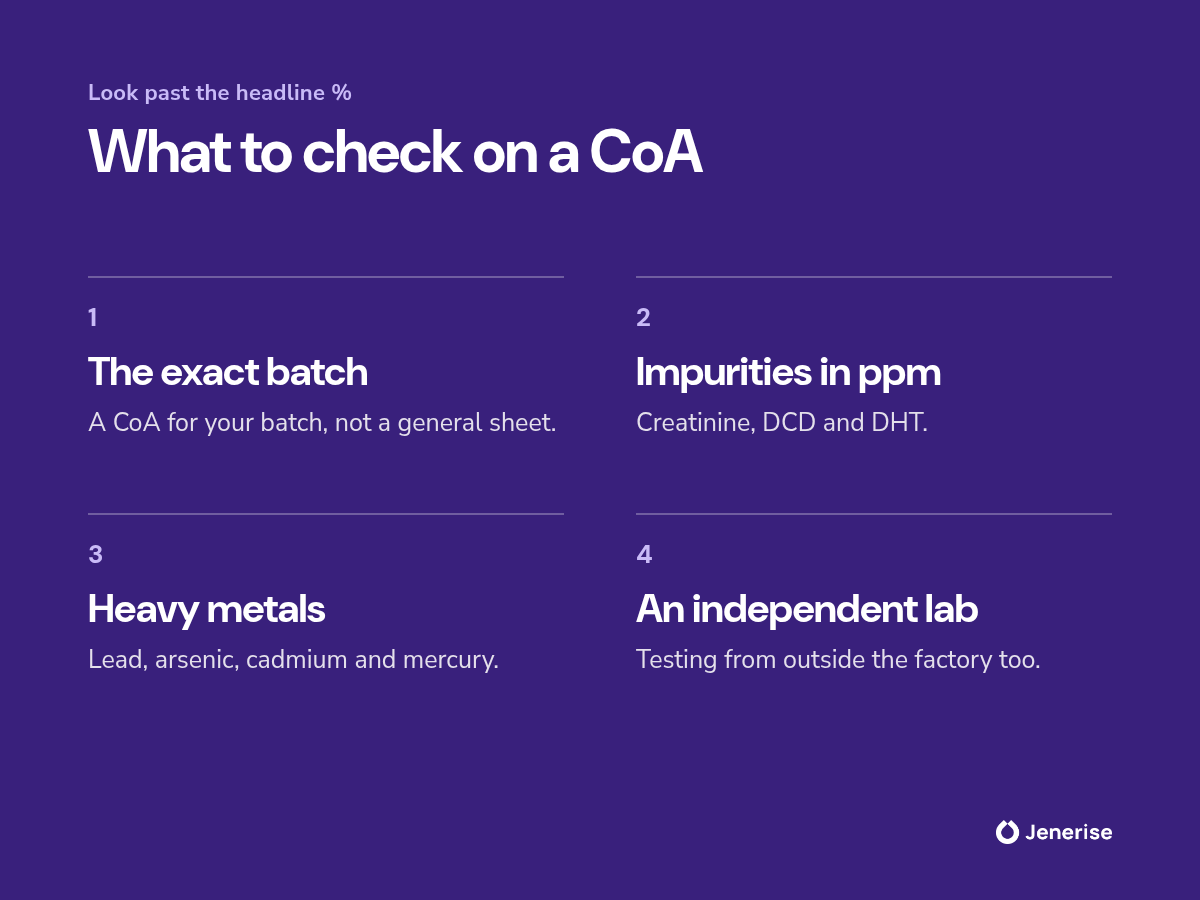
A CoA for the exact batch. Not a general sheet that covers every batch.
Impurity results in ppm. Creatinine, DCD and DHT.
Heavy metals. Lead, arsenic, cadmium and mercury.
An independent lab. Testing from outside the factory, not only from the factory itself.
You can see the batch results for Cr.01 on our Transparency Hub.
We all rise together,
Rachael Jennings | Co-Founder + CBO, Jenerise
Worth knowing: Jenerise makes Jenerise Cr.01™, a third-party verified, precision-grade B2B creatine ingredient. This content is educational and entertaining but also drives awareness of our product.
FAQs
Can creatine be more than 100% pure?
No. Nothing can hold more than 100% of itself. A result over 100% comes from how the number is worked out, usually by comparing the powder with textbook creatine monohydrate, plus a small margin of error in every lab test.
Why does my creatine CoA say 101%?
Most likely, the lab compared your batch with textbook creatine monohydrate, which holds 12.1% water. If your batch held a little less water than that, the maths goes over 100%. Some lab methods also accept results up to about 101.5%.
Does a higher assay mean better creatine?
Not on its own. Lab tests can be off by about 0.5–1%, which is 5,000–10,000 ppm. The impurities that matter are counted in single or double-digit ppm, so the headline number can’t tell two good powders apart.
What should I look for on a creatine certificate of analysis?
Look for a CoA for the exact batch, impurity results in ppm (creatinine, DCD and DHT), heavy metals (lead, arsenic, cadmium and mercury), and testing from an independent lab. These tell you far more than the headline percentage.
Is a minimum of 99.95% content assay good for creatine monohydrate?
Yes. The official standards for creatine monohydrate ask for at least 98.0%. A content assay (commonly referred to as purity) of 99.95% or more is well above that, as long as the impurity and heavy metal results are low too.
More creatine education

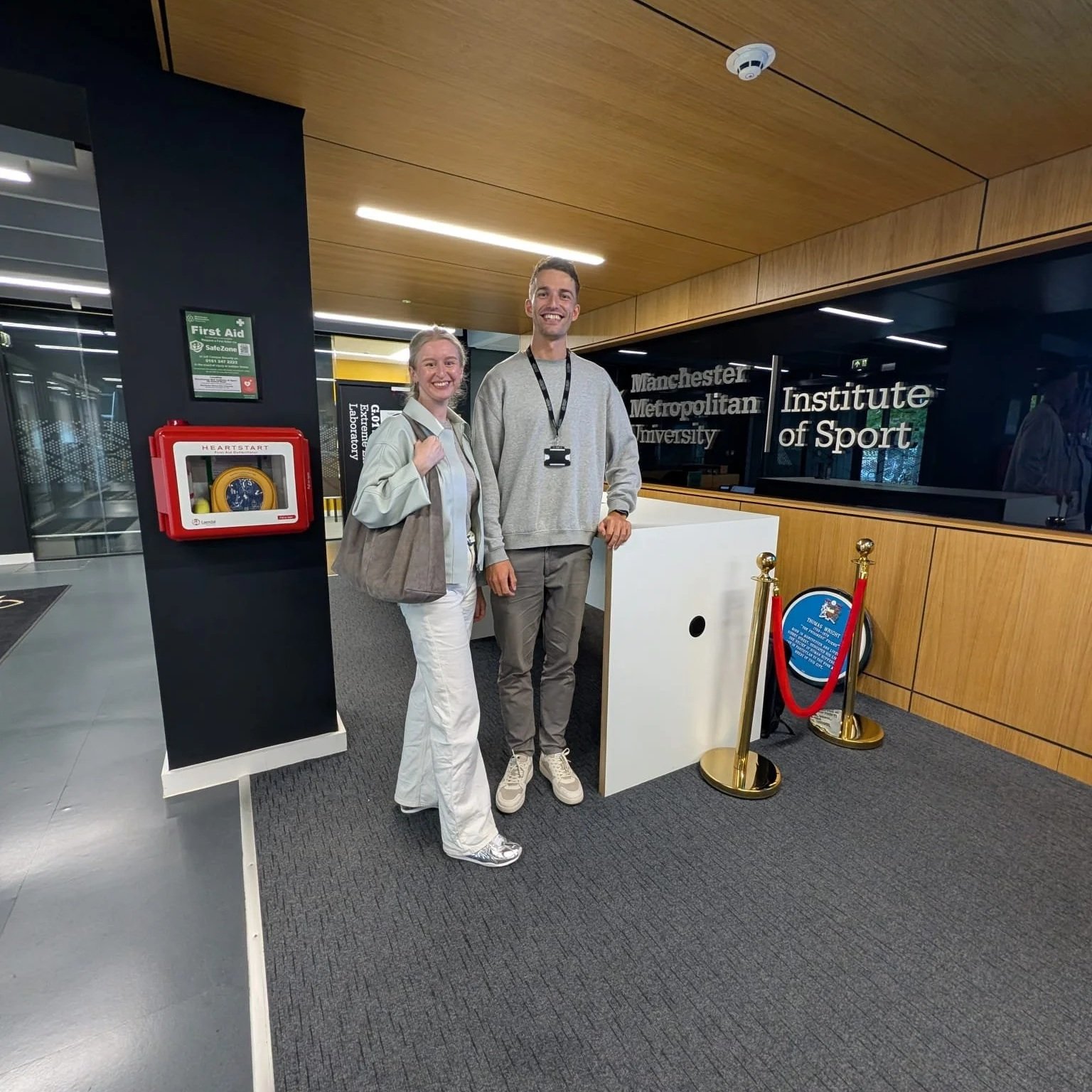





Regulatory expert Diana Morgan explains why an American flag on your label is a claim, which policy shifts are coming for supplements, and whether US-made creatine could return, plus what it means to seize the years.