
"A supplement means an addition to, not instead of."

Dr Susan Hewlings came to Rachael's mic from the place where science meets the supplement shelf. Sue is a nutrition scientist and registered dietitian. She studied nutrition and exercise physiology at Florida State University all the way through to her PhD, then taught at university level for more than two decades. That included helping to build nutrition into the curriculum of a brand-new medical school at the University of Central Florida. Today she is co-founder of Substantiation Sciences, which helps companies back their claims with real evidence, and she leads research at Radicle Science. When a label makes a promise, Sue is the person who asks where the proof is. Outside the lab she is a competitive ultrarunner and adventure racer, and the co-founder of a non-profit animal rescue.
This month, she and Rachael talked about why so many doctors never ask about diet, what happens in the body on a long run, how to judge a supplement when you're standing in front of a wall of them, and what seizing the years means to her.
One nutrition class that set the path
Sue didn't plan any of it. She started out wanting an exercise science degree, but in her sophomore year at Florida State the undergraduate programme was dropped and she was told to major in nutrition instead. She was upset at the time, and now calls it one of the best things that could have happened to her. Her first nutrition class as a freshman changed her life, and colleagues at Florida State later encouraged her to go on to a PhD, something she never thought she was capable of.
What keeps her there is that the field never stands still. "There's never two plus two equals four and you stay there," she said. And because she has always been able to apply what she learns to her own running and health, it has never felt like a job.

Nutrition isn't on the exam
Rachael brought her own story to this one. When she was diagnosed with Hashimoto's thyroiditis at 27, not a single doctor asked about her diet or lifestyle beyond smoking and drinking. Sue had seen the same gap from the inside.
She joined the new University of Central Florida College of Medicine in 2009. Its founding dean, Dr Deborah German, wanted wellness and nutrition built into all four years of the programme, which was unprecedented at the time. Faculty and local doctors were enthusiastic. The students, less so. Three months into a semester, Sue stopped a lecture because she could see social media reflected from their laptops. One student stood up and explained: they loved what they were learning, but nutrition isn't on the Step 1 and Step 2 exams they have to pass to progress, and there was already a lot to hold in their heads.
Sue decided he was right. The issue isn't that medical schools don't want to teach nutrition. Change would have to come from the whole system: the testing, the requirements and what we expect doctors to know. Her conclusion is that nutrition works better as a specialty. You wouldn't expect a family doctor to know as much about the gut as a GI specialist, and she sees nutrition the same way.
It's also why she is a firm believer in seeing more than one professional. You wouldn't expect your GP to be the person who helps with your mental health, so there is no reason to expect them to answer every nutrition question either.

Running as meditation, and finally getting a coach
For Sue, running is her meditation. She has tried actual meditation and isn't good at it. Running is where she relieves stress, makes decisions and plans her presentations. She believes that if you can run a marathon, you can run an ultramarathon: "It's just a matter of wanting to."
For years she ran what runners call junk miles: as far as she could each day, without a plan. Over the past three years that stopped working. A hot day or a hilly course that she used to be able to gut out became a real struggle. Despite a master's in exercise physiology, and being able to write a training plan for almost anyone, she found doing it for herself was different. A little over six months ago she got a coach. Her only regret is not doing it sooner. The plan is strategic, and her coach has also become an accountability partner, because he sees every run she logs. She recently surprised herself with how well she did on a 10-mile run.
With age, she also pays far more attention to recovery, having been over-trained and exhausted in the past without knowing why. And there is more gratitude: every day, she feels thankful she is still able to run.
What happens on a long run, and why downhills hit your quads
Rachael asked what is actually going on in the body during a run of one to four hours. Sue's answer, in a nutshell:
Heat changes everything. When it's hotter than you are used to, more blood goes to your skin, and the gut is one of the first places it is taken from. That is one reason some runners get GI issues.
Glycogen is limited. Your muscles can only store so much carbohydrate. Trained people store more, but fuelling still has to start at the very beginning. Most people work on roughly a 15-minute schedule. Waiting until you feel shaky is too late.
Nothing new on race day. Your fuelling strategy is part of your training, so practise it first.
Duration and intensity drive fuel use. Training raises your lactate threshold and helps you burn fat at higher intensities.
Downhills aren't a rest. They put an eccentric load on your quads, which is why you may feel a downhill course the next day, even if it felt easy at the time.
Above all, Sue wants recreational runners to change one mindset: if you are training, you are an athlete, even if you are not competing, so fuel and recover like one. Her own approach is to think about meals 48 to 72 hours before an event, and to test what works in training, because people respond very differently.
Is it too good to be true?
This was the part of the conversation Rachael had been looking forward to most: what can someone do when they're standing in front of a wall of supplements, trying to work out what to trust?
Sue started with creatine. Apart from protein, which is really a nutrient, she said there isn't another dietary supplement with as much science behind it. Many companies want to do one study and stop. Creatine shows what happens when researchers stay committed: its cognitive benefits weren't on the radar when research started and were discovered along the way. "Science is supposed to generate more questions than answers," she said. Creatine, in her view, is the ideal the rest of the industry should at least try to get close to.
Her checklist for the supplement shelf:
Does it sound too good to be true? If a product claims to do everything, red flags should go up.
Where is the science? If a brand says research was done, it should show you the study, ideally in a peer-reviewed journal. For multi-ingredient products, a study on the finished product is ideal, but claims based on ingredient-level research are fine too.
How transparent are they? The best websites put the study right next to the claim.
Is it making a disease claim? In the US, supplements aren't allowed to make disease claims, so a disease claim is a red flag in itself. Legitimate claims are structure/function claims aimed at healthy people, such as "supports sleep" or "supports a healthy GI tract".
Have there been warning letters? The FDA and FTC issue warning letters when companies make false claims, and many people don't know they exist. Sue suggests asking an AI tool whether a brand has had any, and for a summary of the science with references. You can even photograph a product on the shelf and ask. If the answer is that there is no science, she would be hesitant.
You don't need to understand the studies yourself. "That's not your job," she said. The first question is simply whether any science exists.
An addition to, not instead of
Rachael's working definition of supplements is things that can help keep healthy people healthy for as long as possible. She encourages people to see creatine not as a problem solver but as the cherry on top. She borrowed Darren Candow and Scott Forbes's cake analogy: creatine is the sprinkles on top of the foundational layers of diet, training and resistance exercise.
Sue agreed. She always told her students that "a supplement means an addition to, not instead of." No supplement, creatine included, substitutes for that foundation. Supplements aren't meant to treat a problem. They are there to maintain and optimise a healthy system. Expectations matter too. Many people expect a supplement to work like a painkiller, bringing relief within an hour, and that is usually not how it works. Creatine is a long game.
Sue recommends creatine to everybody because of the safety profile its body of research has established. She was candid that she isn't supplementing with it right now, because it gives her GI side effects that don't suit her. Her general advice for anyone trying it for the first time, as with any supplement, is to start low (she suggested around three grams), make it the only change you make, and see how you feel. She added that people who don't eat much meat, including vegetarians, seem to have benefited most for muscle, performance and recovery.
The ARF Shack
Sue has wanted to run a dog rescue since she was a child. It started for real when she found a blonde brindle pit bull running down the highway chasing cars, and it grew into a non-profit, the ARF Shack (Alliance for the Rescue of Familiars). In Orlando she sometimes had 40 dogs across different foster homes. "The animals never burned me out, but the humans did," she said.
Since she moved to the Florida Keys, the rescue has shifted towards supporting other rescues, which is what the word "alliance" was always meant to allow. Today Sue has three dogs of her own and volunteers at her local SPCA.
If you want to help, she pointed to ways you might not think of:
Foster, if you're not ready to adopt. Taking in a mum and her pups is a great way to help.
Volunteer for transport. If you're on a road trip with room to spare, you can help move animals between rescues.
Fund medical care. Many pets are rehomed because their owners can't afford treatment. You can pay a vet directly so you know where the money goes.
Seizing the years means appreciation
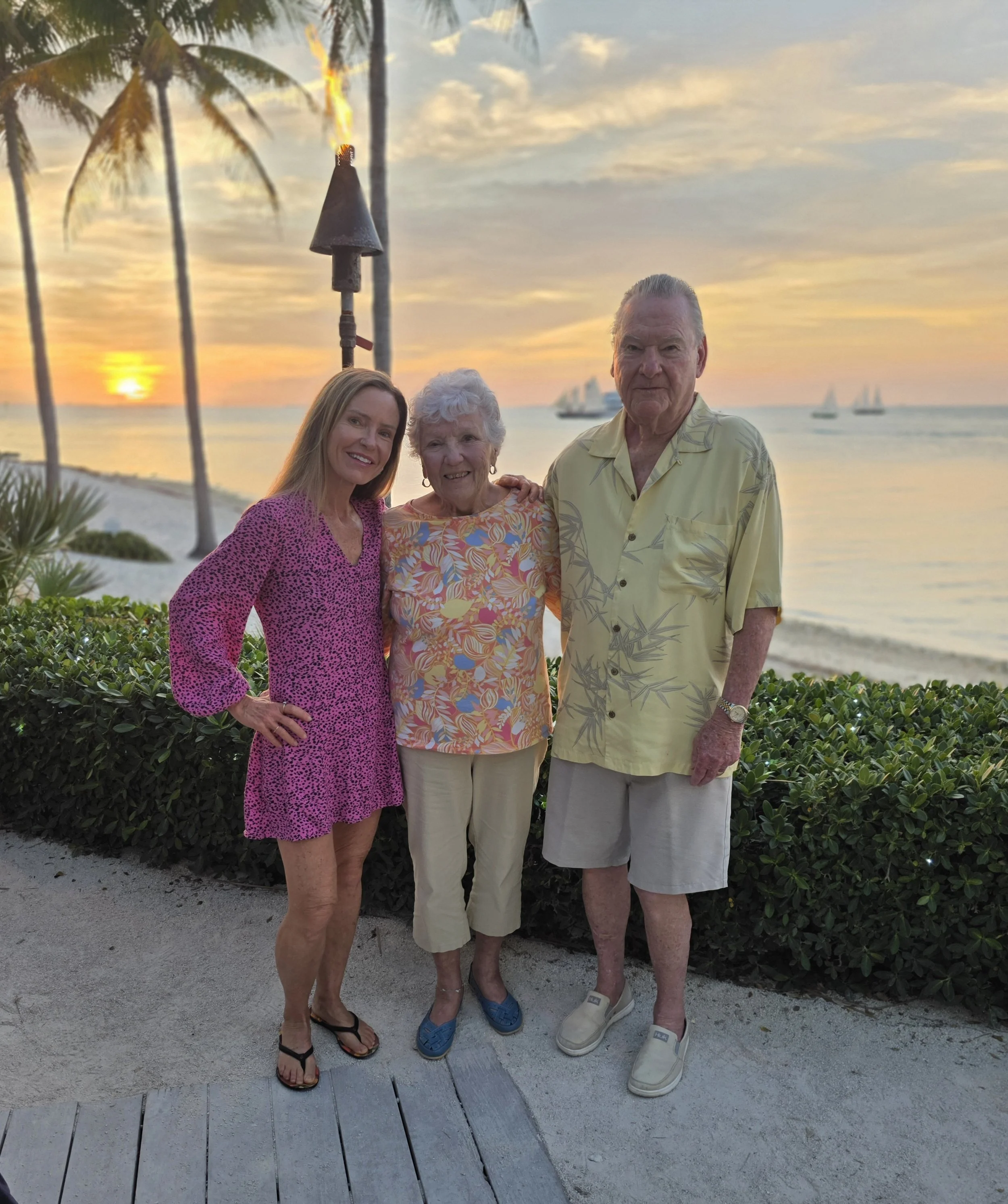
Asked what seizing the years means to her at the end of 2026, Sue talked about her body. Like many women, she said, she has had a love-hate relationship with it, trying to make it do things it isn't supposed to do. At 57, she knows there is plenty about ageing to feel negative about. For her, seizing the years means appreciating that she is fortunate to be here in good health, and appreciating what her body can do. "Stop the love-hate and just do the love and support side of it." It also means no longer forcing her body towards an ideal for reasons that aren't founded in health.
Rachael closed on the same note: you can have ambitious athletic goals and still leave plenty of room to accept yourself and give your body grace.
You can connect with Sue on LinkedIn.
Worth knowing: Jenerise makes Jenerise Cr.01™, a third-party verified, precision-grade B2B creatine ingredient. This content is educational and entertaining but also drives awareness of our product.
If this conversation resonated with you, you can find more episodes on Seizing the Years, along with deeper dives from the clinical team on the Jenerise blog.
We all rise together,
Rachael Jennings | Co-Founder + CBO, Jenerise
Frequently asked questions
Why don't more doctors ask about nutrition?
According to Sue, it's not that medical schools don't want to teach it. Nutrition isn't on the Step 1 and Step 2 exams students must pass, so it gets less of their attention. She believes nutrition works better as a specialty, and that it's worth seeing more than one professional.
How can I tell whether a supplement claim is backed by science?
Sue's first test is whether it sounds too good to be true. Then ask where the study is and whether the brand shows it to you, ideally in a peer-reviewed journal. You don't need to understand the research yourself. Start by checking whether any exists.
What is a red flag on a supplement label?
In the US, supplements aren't allowed to make disease claims, so Sue treats any disease claim as a red flag. Legitimate claims are structure/function claims aimed at healthy people, such as "supports sleep". She also suggests checking for FDA or FTC warning letters.
How does Sue suggest starting with creatine?
Her general advice is to start at a low dose (she suggested around three grams) and make it the only change you make, so you know how it affects you. She sees creatine as an addition to a foundation of diet and training, not a replacement for it.
Why do downhill runs make your quads sore the next day?
Sue explained that running downhill puts an eccentric load on your quads. You may not feel it in the moment, but it can show up the next day as delayed onset muscle soreness.
More episodes of Seizing the Years







Nutrition scientist Dr Susan Hewlings on why doctors aren't taught nutrition, how to judge a supplement claim, and why a supplement is an addition to, not instead of.